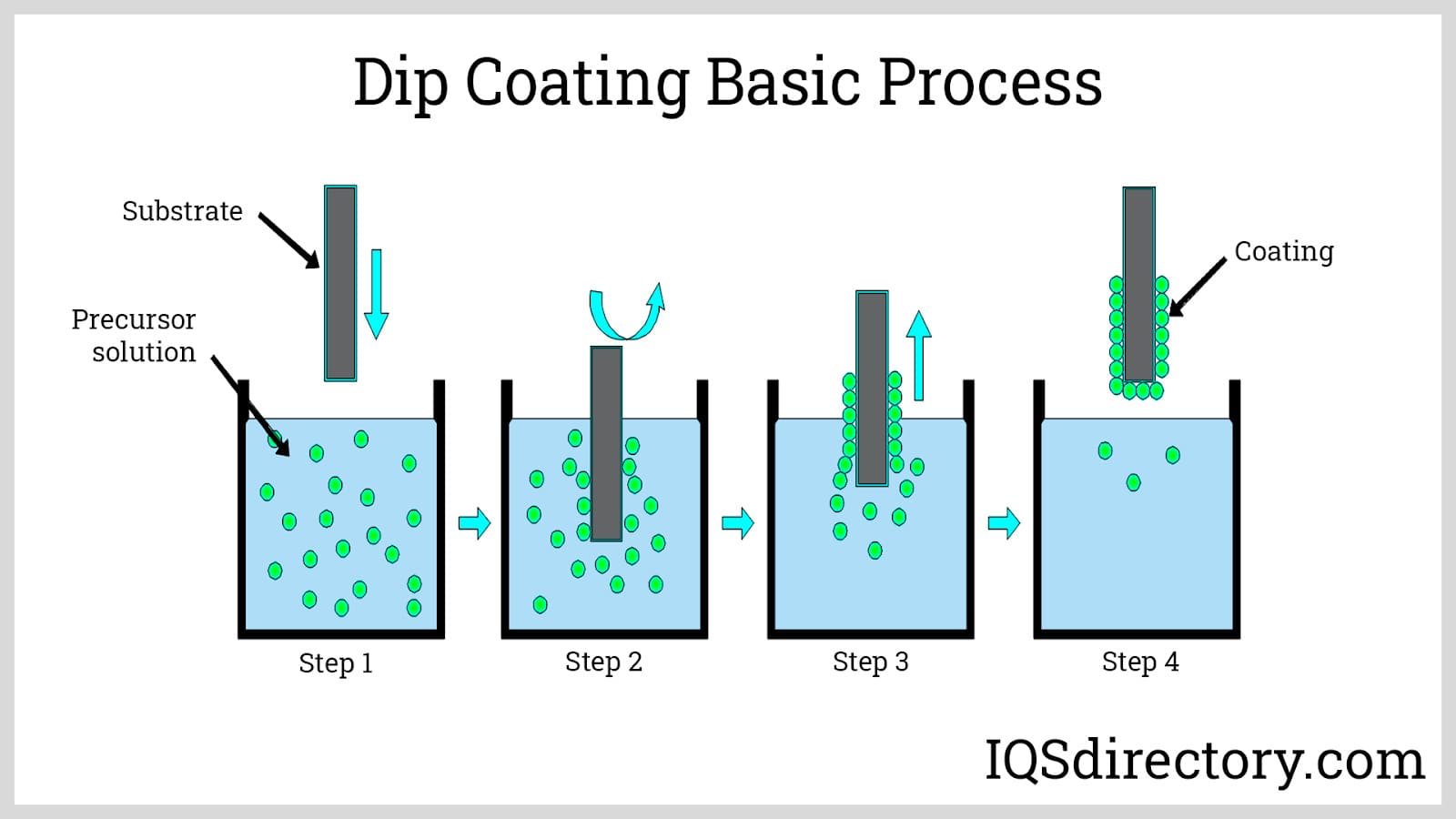
Dip coating is a straightforward and relatively cost-effective method of coating objects and is a three-step process. It begins with the immersion of an object or manufactured component into a vat of molten plastic, in this case PVC. A primer such as phosphate or chromate may be applied to the surface of the component to increase the adhesion of PVC to the surfaceRead More…
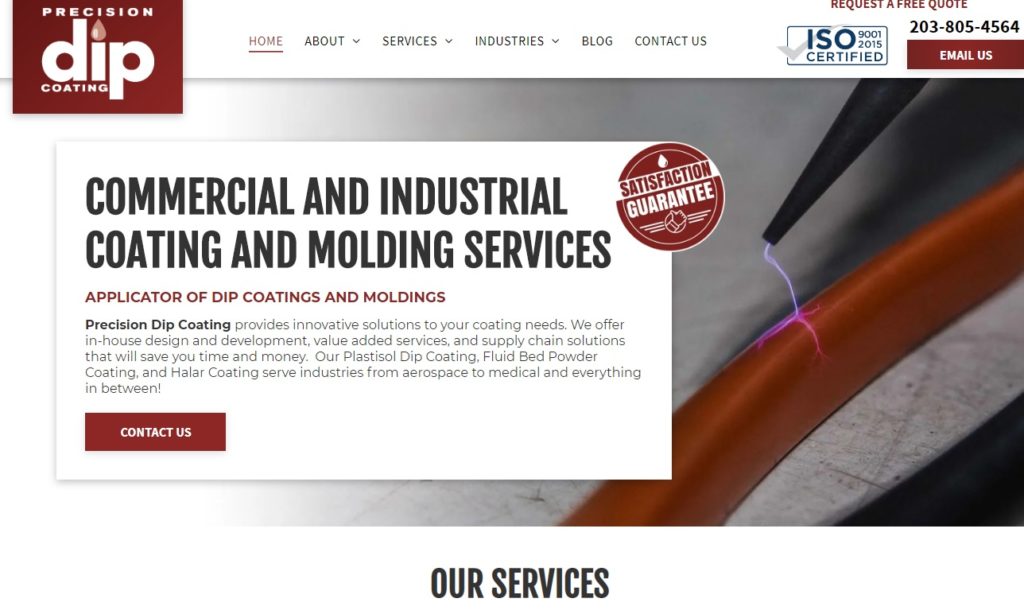
Precision Dip Coating provides dip coating services for the manufacture of soft plastic parts such as cap plugs. hand grips, and more. Decorative and protective, our services are very cost effective and we have a proven track record for on time delivery and precise manufacturing. We can match any color you need, and offer services such as assembly, die cutting, packaging, and decorating.
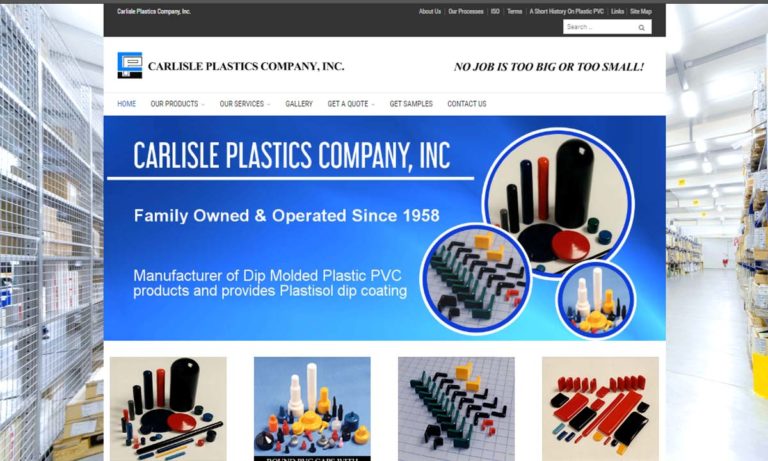
Carlisle Plastics is a dip molding plastics manufacturer offering end caps, plastisol paint masks, thread protectors, tube closures, protective caps and decorative caps.
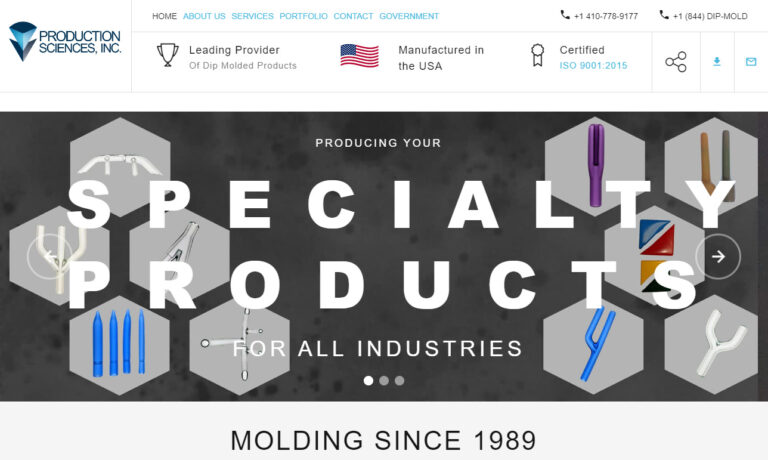
At Production Sciences, Inc., we pride ourselves on being pioneers in the realm of dip-molded plastics, sculpting a legacy of innovation and excellence that spans decades. As a collective force, we embody a commitment to precision, creativity, and unwavering quality in the realm of plastic manufacturing.
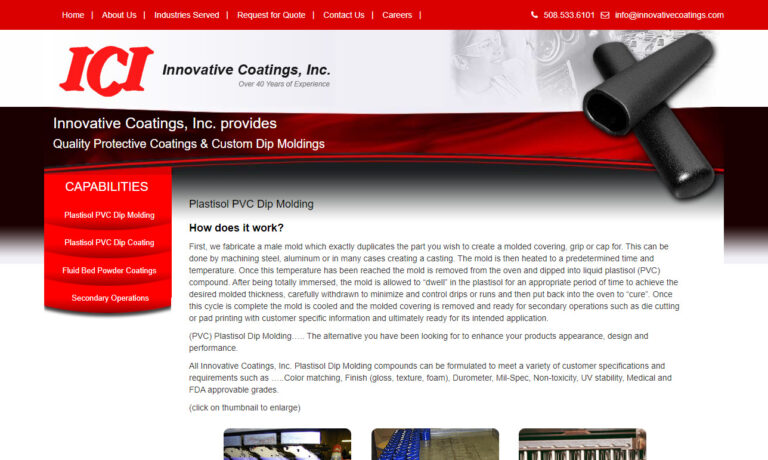
Innovative Coatings is a manufacturer of plastisol dip molding and fluidized bed powder coatings of epoxy, polyolefins, nylon and vinyl. Our dip coatings are of FDA-approved and biomedical grades.

More PVC Coating Companies
Comprehensive Guide to PVC Coating: Process, Applications, and Benefits
PVC coating, also known as polyvinyl chloride coating, is a highly versatile and durable method for enhancing the performance and lifespan of a wide range of products. By applying a flexible or rigid layer of PVC to various substrates, manufacturers are able to improve chemical resistance, weatherability, electrical insulation, and aesthetic properties. This guide explores the PVC dip coating process, its unique advantages, common applications, and key decision factors for choosing the right PVC coating solution for your project. If you are searching for information about industrial plastic coatings, custom PVC coatings, or want to compare dip coating with other protective surface treatments, you will find detailed insights below to support your buying decisions and technical evaluations.
Understanding the PVC Dip Coating Process
The PVC dip coating process involves submerging an object into a vat of molten PVC plastisol or liquid PVC. The thickness of the resulting coating is controlled by the time the object is immersed and the speed with which it is withdrawn from the vat. As the object is removed slowly, the molten plastic adheres evenly to its surface and begins to cool and harden.
If an object is removed from the molten PVC too quickly, surface irregularities or inconsistencies in coating thickness can occur. For optimal results, the process often incorporates a post-dip heat treatment—sometimes called PVC fusion—to ensure complete bonding of the PVC to the substrate. Thanks to the automatic operation of modern dip molding machines, this process delivers high throughput and consistent results, making it ideal for both high-volume manufacturing and custom applications.
PVC Dip Coating vs. Other Plastic Coating Methods
Are you considering whether PVC dip coating or another plastic coating technology is best for your application? Dip coating is distinct from powder coating, spray coating, and electrocoating in several ways. Dip coating offers uniform coverage, even on complex geometries, and is particularly effective for coating irregular, 3D, or tubular shapes. Unlike spray coatings, which can lead to overspray and waste, dip coating maximizes material efficiency. It is also a preferred method for achieving thicker coatings in a single step. If you are weighing the pros and cons of different coating processes, consider these factors:
- Ability to coat internal and external surfaces evenly
- Suitability for batch and continuous production
- Low material waste and reduced environmental impact
- Customization possibilities for color, thickness, and texture
Want to learn more about how PVC dip coating compares to other protective surface treatments? Visit our Plastic Coating Processes resource for an in-depth comparison.
Why Choose PVC Dip Coating?
- Minimal Material Waste: Only the PVC adhering to the object is used, while the remainder stays in the vat, making this an efficient and eco-conscious manufacturing method.
- Versatility in Shape and Size: PVC dip coating is not restricted by the geometry of the object. As long as a suitable vat is available, even large or complex shapes can be coated.
- Customizable Properties: The coating’s thickness, rigidity, color, and texture can be tailored to precise product requirements, supporting a range of industrial and consumer uses.
- Uniform Coverage: Dip coating ensures an even layer on all surfaces, reducing the risk of weak spots or coating failures.
- Cost-Effective for Prototyping and Large Volumes: The process accommodates both small-batch prototyping and mass production, making it ideal for startups and established manufacturers alike.
- Scalability: Easily scale your production from prototyping to full-scale manufacturing without changing the coating process.
Key Applications of PVC Coating
Due to its unique combination of flexibility, chemical resistance, and electrical insulation, PVC coatings are widely used across a spectrum of industries. If you are searching for the best coating for corrosion protection, electrical insulation, or ergonomic enhancements, PVC offers proven solutions for:
- Electrical and Electronic Components: PVC is an excellent electrical insulator, making it a preferred choice for coating wires, extension cords, jumper cables, and connectors. Its thermal resistance also protects against heat buildup. Looking for cable harness coatings or protective sleeving? PVC is a top candidate.
- Wire Mesh and Fencing: Chain link fences, welded wire mesh, and similar products rely on PVC coatings for enhanced weather resistance and corrosion protection. Explore solutions for outdoor fencing, animal cages, and security barriers.
- Household and Industrial Products: Items such as dishwasher baskets, freezer shelving, tool handles, and racks benefit from the non-slip, waterproof, and durable nature of PVC coating. If you need a custom grip coating or protective rack covering, PVC excels here.
- Food Processing Equipment: When formulated and tested for FDA compliance, PVC coatings can be safely used in food processing, storage, and handling applications. Applications include food grade shelving, baking racks, and dishwasher racks.
- Automotive and Transportation: Protective PVC coatings are applied to car parts, handles, racks, battery terminal covers, and cargo carriers to prevent corrosion and wear. If you need automotive protective coatings, cargo rack coatings, or vehicle part insulation, PVC is a trusted material.
- Medical and Laboratory Tools: Custom dip-molded PVC coatings are used on grips, medical instruments, lab racks, and tubing for improved hygiene and chemical resistance. Ask about medical device coatings and laboratory rack coatings.
- Sports and Recreational Equipment: PVC coatings are used on gym equipment, playground structures, and exercise machine handles for safety, comfort, and color-coding.
- Construction Materials: PVC-coated rebar, scaffolding, and safety barriers deliver enhanced durability and weather resistance in demanding environments.
Looking for a Specific PVC Coating Application?
Explore our specialized guides on medical dip molding, electrical insulation coatings, or food-safe plastic coatings to learn more about tailored solutions for your industry.
Advantages of PVC Coating Over Alternative Coating Methods
When evaluating surface protection technologies, buyers often compare PVC coating with alternatives such as powder coating, Teflon or PTFE coating, and rubberized coatings. Here are the key advantages of using PVC dip coating:
- Superior Flexibility: PVC coatings can be engineered for high flexibility or rigidity, accommodating dynamic or moving parts. This makes them ideal for flexible grips, hinged parts, and mechanical assemblies.
- Excellent Chemical and Water Resistance: Particularly important for harsh environments, PVC protects against oils, acids, water, and cleaning agents. This is essential for marine applications, food processing, and chemical manufacturing.
- Electrical and Thermal Insulation: Provides a robust dielectric barrier, ideal for electrical and electronic applications. If you need high voltage insulation or moisture barriers, PVC is an industry standard.
- Non-slip Grip and Comfort: Optional texturing and softness add safety and usability to tools, handles, and consumer products. Choose PVC for ergonomic coatings and anti-slip surfaces.
- Wide Range of Colors and Finishes: Custom color matching and branding options are available for enhanced product appeal. This is ideal for OEM branding and color-coded inventory.
- Cost-Effective for High Volumes: The automated nature of dip coating reduces labor and material costs for large production runs.
- Environmentally Responsible: Minimal waste and potential for recyclable materials make PVC coating a sustainable choice. Many suppliers now offer recycled PVC coatings and low-VOC formulations.
- Strong Adhesion: Properly applied PVC coatings provide long-lasting, durable protection even in high-wear environments.
Is PVC Coating Right for My Project?
Curious about whether PVC dip coating is the best solution for your application? Try asking:
- What environmental conditions (chemicals, moisture, UV) will the coated part encounter?
- Is electrical or thermal insulation vital for your product’s safety?
- Do you require a soft, textured, or colored finish for ergonomics or branding?
- Are there regulatory requirements, such as FDA or RoHS compliance?
- What are your production volume and budget expectations?
- Do you need a coating that can be easily repaired or refurbished?
- Are you looking for an eco-friendly or recycled material option?
Contact our expert team for a free consultation and sample evaluation to determine the ideal coating solution for your needs. Our specialists can help you compare PVC with other plastic coatings, calculate total cost of ownership, and optimize your product's performance.
Technical Considerations: Customizing Your PVC Coating
One of the strengths of PVC dip coating is its ability to meet precise technical specifications. When planning a custom PVC coating project, consider the following factors to ensure your coating meets all functional, regulatory, and aesthetic requirements:
- Coating Thickness: Ranges from thin, flexible films to heavy-duty protective layers, adjustable by immersion time and PVC formulation. Thicker coatings provide greater impact resistance and insulation.
- Color and Finish: PVC can be pigmented to match virtually any color and is available in gloss, matte, or textured finishes. This supports branding, color coding, and product differentiation needs.
- Rigidity and Flexibility: Formulations can be tuned for rigid, semi-rigid, or highly flexible coatings. Ask about soft-touch PVC for grips or rigid PVC for structural protection.
- Hardness and Durometer: Specify the desired “feel” or softness for ergonomic applications. Hardness ratings help tailor the user experience for tools, handles, and consumer products.
- Temperature and Chemical Resistance: Special additives can increase resistance to extreme temperatures or aggressive chemicals. For outdoor products or chemical processing equipment, request high-performance PVC blends.
- Adhesion and Surface Preparation: Proper cleaning and priming ensure optimal adhesion and longevity of the coating. Surface preparation is especially critical for metals, glass, or engineered plastics.
- Compliance and Certifications: Ask about FDA, REACH, RoHS, or UL certification for regulated industries. If you need food-safe coatings or medical-grade coatings, supplier documentation is essential.
- Anti-Microbial and Special Properties: For healthcare, food, and cleanroom applications, request coatings with anti-microbial additives or static dissipative properties.
Common Questions About PVC Coating
- How long does PVC dip coating last? With proper surface preparation and application, PVC coatings can last for years in demanding environments, providing ongoing protection and performance. Coating longevity depends on thickness, exposure conditions, and substrate material.
- Is PVC coating food safe? When formulated and tested for FDA compliance, PVC coatings are suitable for direct food contact and food processing equipment. Always request certification from your supplier.
- Can PVC coatings be repaired or removed? Damaged coatings can often be repaired with heat or by re-dipping. Removal typically requires mechanical or chemical methods and should be discussed with your coating provider. For sustainable applications, ask about repairability and end-of-life options.
- What colors and textures are available? Virtually unlimited colors and a variety of finishes (smooth, matte, textured, soft-touch) can be produced to match your branding or ergonomic needs. Custom color matching is standard for most suppliers.
- Are there eco-friendly PVC coating options? Advances in PVC formulation and recycling make it possible to select more sustainable materials. Ask your supplier about green alternatives and recycling programs. Look for low-VOC and phthalate-free PVC coatings for compliance with modern environmental standards.
- Is PVC coating UV resistant? Standard PVC offers good UV stability, but for outdoor or high-UV environments, request UV-stabilized or weather-resistant formulations for maximum durability.
- How do I specify the right PVC coating for my application? Work with your supplier to define performance requirements, regulatory needs, and aesthetic preferences. Provide details on operating environment, exposure risks, and part geometry for a tailored recommendation.
Industry-Specific Use Cases for PVC Coated Products
While PVC coating is widely used for general corrosion and electrical protection, many industries rely on specialized PVC coated products to address unique challenges. Examples include:
Food and Beverage Industry
- Wire shelving and racks: PVC coatings provide a hygienic, easy-to-clean surface that resists moisture and chemicals in refrigerated and food storage environments.
- Dishwasher baskets: Protects metal from rusting and withstands repeated exposure to hot water and detergents.
- Food processing tools and trays: Custom-molded PVC coatings ensure compliance with food safety standards and enhance durability.
Industrial and Manufacturing
- Tool handles and grips: Non-slip, ergonomic PVC coatings improve worker safety and comfort.
- Machine guards and covers: Durable coatings protect against impact, abrasion, and chemicals.
- Storage racks and bins: PVC prevents corrosion and damage in industrial storage systems.
- Conveyor rollers and guides: PVC coatings reduce friction and wear, improving equipment longevity.
Construction and Infrastructure
- Fencing and safety barriers: UV-resistant PVC coatings extend the life of chain link fences and barriers exposed to outdoor conditions.
- Rebar and structural steel: Coating helps prevent corrosion in harsh construction environments.
- Guardrails and handrails: PVC provides slip resistance and a pleasant tactile feel.
- Temporary site safety equipment: Colorful PVC coatings aid visibility and compliance on construction sites.
Automotive and Transportation
- Car racks and cargo carriers: Coated surfaces prevent scratching and corrosion from weather exposure and cargo movement.
- Battery terminal covers: PVC provides insulation and moisture protection for electrical connections.
- Seat frame and bracket coatings: Enhance corrosion resistance in interior and underbody applications.
- Trailer and truck accessories: PVC coatings increase product lifespan in harsh road and weather conditions.
Medical, Laboratory, and Cleanroom
- Instrument handles and racks: Chemically resistant, easy to sterilize, and color-coded for safety or process control.
- Tubing and protective covers: Flexible PVC coatings offer protection and hygiene in sensitive environments.
- Cleanroom shelving and carts: PVC coatings meet strict cleanliness and sanitation requirements.
- Medical device housings: Custom PVC coatings can be formulated for biocompatibility and easy cleaning.
How to Choose a PVC Coating Supplier
Making the right supplier choice is vital for achieving the best performance, quality, and value from your PVC coated products. Consider these factors when selecting a PVC coating company or custom dip coating supplier:
- Experience and Technical Expertise: Look for a provider with a proven track record in your industry and the ability to deliver custom coatings. Check for case studies and customer testimonials.
- Equipment and Capacity: Ensure the supplier has the right dip molding machinery and production volume capabilities for your needs, whether you need rapid prototyping or high-volume runs.
- Quality Assurance: Ask about testing protocols, certifications, and compliance with industry standards. Inquire about ISO, FDA, or UL certifications as relevant to your application.
- Design and Engineering Support: Choose a partner who can help with prototyping, material selection, and process optimization to meet your unique product requirements.
- Lead Time and Flexibility: Evaluate the supplier’s ability to meet deadlines for both short runs and large-scale production.
- Sustainability and Compliance: For eco-friendly projects, look for companies offering recycled PVC or low-VOC formulations.
For a list of recommended suppliers and custom coating options, visit our Plastic Coating Companies Directory. Not sure what to ask a potential supplier? Try questions like, "What is your experience with FDA-compliant PVC coatings?" or "Can you provide samples of previous custom dip coating projects in my industry?"
Cost Factors and ROI of PVC Coating
Understanding the cost structure of PVC dip coating helps buyers make informed decisions. Key factors influencing cost include:
- Part size, shape, and complexity
- Coating thickness and formulation
- Volume of production (per-piece costs drop at higher volumes)
- Color and finish customization
- Compliance and certification requirements
- Shipping and handling, especially for large or fragile items
- Tooling and setup costs for custom or complex shapes
- Inspection and quality control requirements (e.g., 100% inspection for medical or food applications)
Despite initial setup costs, the long-term ROI of PVC coatings is strong due to reduced maintenance, extended product lifespan, and improved safety and performance. PVC coatings help prevent costly downtime, reduce replacement frequency, and lower overall lifecycle costs for coated products. Decision makers are encouraged to conduct a total cost of ownership analysis when evaluating PVC coating vs. alternative solutions.
Want a Custom Quote?
Looking for a tailored estimate for your PVC coating project? Request a quote today and our engineers will help you specify the ideal solution for your application and budget. Need a rapid prototype or a cost comparison for different coating types? Our team provides fast, detailed quotes and technical guidance.
Innovations and Future Trends in PVC Coating
The PVC coating industry continues to evolve, driven by advancements in material science, automation, and sustainability. Recent innovations include:
- Development of phthalate-free and low-VOC PVC coatings for safer, greener products
- Smart coatings with antimicrobial or self-healing properties
- Integration with automated quality control and robotics for higher consistency
- Expanded use of recycled PVC materials and closed-loop manufacturing
- Customization for emerging industries, such as renewable energy and electric vehicles
- Digital color matching and rapid prototyping for faster product development cycles
- Advanced UV and weather-resistant formulas for extreme outdoor applications
Stay up-to-date with industry news and trends to maximize the value of your PVC coated products. Interested in the future of sustainable manufacturing or smart coatings? Explore our blog for the latest updates and case studies.
Summary: Why PVC Coating is a Smart Choice
PVC coating remains a leading solution for product protection, performance, and customization in countless industries. Its cost efficiency, versatility, and exceptional physical properties make it a preferred alternative to traditional coatings and finishing techniques. Whether you need corrosion protection for wire mesh, insulation for electrical components, or FDA compliance for food processing, PVC coating delivers reliable performance and long-term value. As manufacturing requirements evolve, PVC coatings continue to adapt—offering solutions for challenging new applications in medical, automotive, construction, and green technology sectors.
Have more questions or need expert advice on PVC dip coating?Contact our team for technical guidance, material samples, or a custom quote today. Want to compare PVC with other plastic coating methods? Explore our knowledge base for detailed comparisons and buyer guides.
 Fiberglass Fabricators
 Injection Molded Plastics
 Plastic Blow Molding
 Plastic Dip Molding
 Plastic Extrusions
 Plastic Tubing
 Polyurethane Molding
 Rotational Molding
 Vacuum Forming
 Castings & Forgings
 Bulk Material Handling
 Electrical & Electronic Components
 Flow Instrumentation
 Hardware
 Material Handling Equipment
 Metal Cutting Services
 Metal Forming Services
 Metal Suppliers
 Motion Control Products
 Plant & Facility Equipment
 Plant & Facility Supplies
 Plastic Molding Processes
 Pumps & Valves
 Recycling Equipment
 Rubber Products & Services